Bounty Programmes

There is an odd relationship between the ideas of bounty hunting and law enforcement. In the old west there seemed to be an idea that offering a reward for the dead or alive capture of a wanted criminal was a perfectly acceptable way to get things done across a vast territory lacking in sherrifs or marshalls. In more modern times the idea of retrieving someone who skipped out on a bail bond (in parts of the USA anyway) remains an actual thing with those people making a living out of bounty hunting keeping that gray area between the law and lawlessness populated. In the world of IT the term “bounty” has taken on a different meaning, though they are still hunted and, despite their seemingly obvious advantages, remain a hotly debated subject.

The term Bounty Programme is sometimes applied to an incentive scheme designed to encourage members of the team to learn a specific skill or technology and prove they’ve done so by sitting the relevant certification exam. I have seen three such programmes in effect over my career so far and have become something of an advovate for them for a couple of reasons.

Continue reading “Bounty Programmes”


MySQL on Raspberry Pi

I’ve wanted to have a local and always running database to play with for a while and though cloud databases are interesting and appealing for a variety of reasons, my already documented love of the Raspberry Pi led to the inevitable conclusion that I’d use one as a database server. While this isn’t a surprising turn of events, what was surprising is how disgustingly easy it was to get up and running very quickly.

My Plex server has been in place for a good while now, dutifully serving up media that might otherwise be forgotten or unavailable elsewhere, but it’s not taxed in terms of usage so it was the logical candidate for double jobbing as a DB server too. MySQL was the choice of weapon for an RDBMS for all the reasons that make it such a popular choice for web applications everywhere.

The install process was made simple by the fact that Ubuntu is the OS on my Raspberry Pi, meaning that the MySQL install was as easy as:

sudo apt install mysql-server

With MySQL on board all that remained to get up and running was to configure access by enabling remote (non-localhost) connections and creating a user that has the ability to connect from a remote client machine. With those steps done it was over to MySQL Workbench to test the connection.

All very simple and straightforward, with only one little configuration change needed to accommodate the unusual server hardware and that was to move the location of the datafiles off the SD card the Raspberry Pi uses for primary storage and onto the SSD drive I’ve been using for media files for the Plex system.

The Raspberry Pi provides wonderful opportunities to try out things very quickly, even odd ideas like running database servers on what would normally be considered under-powered hardware for such a task. All in all, this task took less than an hour from start to finish, though the bigger job of putting some useful data into the database will, I suspect, take much longer.

A Quick Raspberry Pi Project

Since about 2015 or so, it seems like there are always Raspberry Pi’s lying around the place, at work and home, just waiting for some project to come along to put them to use.

One of the Pi’s looking for a job as part of my home lab has found just itself retasked as a Plex Media Server following a very simple process.

  • A new Operating System was written onto the SDCard, this time out the OS chosen was the Raspberry Pi variant of Ubuntu Server order to have a more consistent experience across systems being used lately.
  • Once up and running and fully patched, the Plex repo was added and the Media Server installed via apt.
  • Directories were added to host the media library and the Plex configuration ran. Once complete it was a simple matter of connecting the TV to the new media server via the Plex app and enjoying the content I had that was driving this little endeavour in the first place.

I heard it said recently that a Raspberry Pi with decent enough storage can be purchased for less then the price of running an EC2 instance for a year, so when it fits the use case a Pi can be a great solution and even in the age of cloud there are still times when it’s better to run locally (streaming dodgy media being a classic).

https://linuxize.com/post/how-to-install-plex-media-server-on-ubuntu-20-04/

https://www.plex.tv/

Considering The Scrum Guide

It is perhaps unsurprising when you consider the widespread adoption of the framework by development teams around the world that there seems to be almost as many variations of practices as there are teams working under the auspices of Scrum. Over the years since Scrum burst onto the development scene as a new way of organising to deliver complex work, a host of techniques, customs, and habits have found their way into how teams implement Scrum in the real world. Anyone who has worked with different teams in different organisations can tell you how these customs can vary and of the delight that can come with introducing to a team a practice that you saw work somewhere else.

Continue reading “Considering The Scrum Guide”

Psychological Safety Webinar

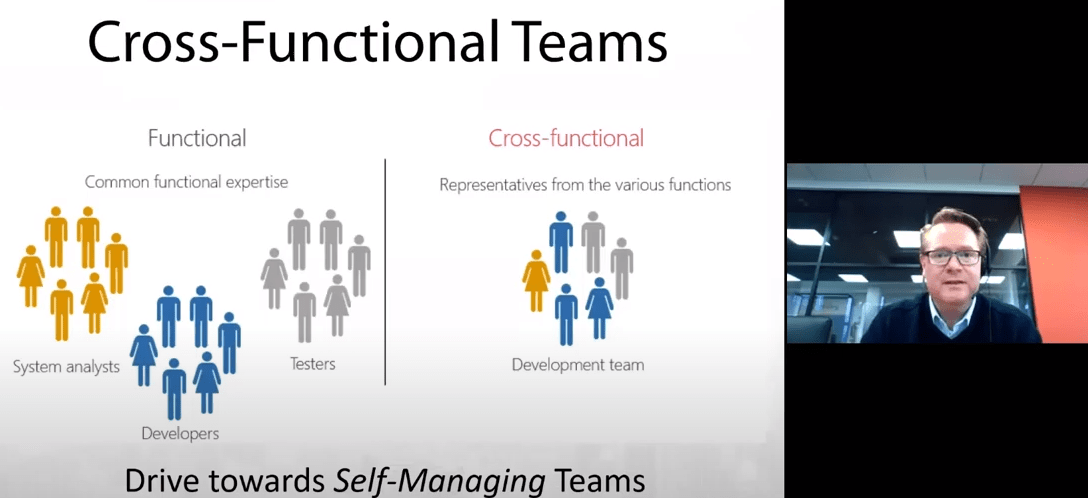
Earlier today I was fortunate to be able to participate in a webinar for Laois and Offaly Education and Training Board on the subject of psychological safety in teams, which is a topic I care deeply about as it’s so essential for cross-functional agile teams to be able to operate well, but beyond that, ensuring psychological safety at work is in my mind simply the right thing to do!

Check out the video and slides below.

Lessons Learned in 2020

A lot has already been written about the year 2020 and I’m confident that an awful lot more will be written about the impact on society this particular year has had. As the events of the year unfolded and various aspects of life were forced to adapt to the different challenges that were thrown up, it seemed like more and more material for academic papers, theses, policy documents, training materials, and even half decent fiction was being presented on an almost daily basis. From the technology leadership perspective I think 2020 showed that there’s work to be done around how to adapt Agile processes to remote work, but while interesting this isn’t the only area where there’s something to be learned, so in the best traditions of the internet here’s a list of things I consider among the lessons 2020 taught.

Continue reading “Lessons Learned in 2020”

My Role

As someone who has spent their career working with systems I have come to love a good framework. Taking a systematic approach to how things should operate enables me to conceptualize the tasks at hand and to identify gaps and weak spots so that they can be managed successfully. Identifying the component parts of my new role as Director of Software Innovation with ACETECH and weaving them together into a framework of sorts has helped me in these early stages to approach some difficult topics with confidence as well as quickly establishing where I can add value.

Continue reading “My Role”

Notebooks

I flip-flop on the subject of whether to use a paper notebook or to use a laptop for everything including note taking in meetings and capturing stray thoughts. My indecision comes from appreciating both sides of the argument for either tool with laptops claiming the higher ground in terms of efficiency but loosing out to things like noise levels, having the opened screen imposing a barrier between you and other people, the issues around battery life, and the distractions that come with the installed apps all clamouring for your attention, usually when you need to be more focused. Continue reading “Notebooks”

AWS ChatOps with Hubot & Slack

There can be many reasons for wanting to explore the use of Chatbots. In situations where collaboration tools like Slack are already in place, introducing a bot is merely another form of automation to support the way people work. In companies that are interested in providing a forum for people to develop technical skills, there are definite possibilities offered through Chatbots, especially as extending their functionality is not overly difficult and actually makes them more useful. For the enthusiast, Chatbots provide a glimpse into a future where interactions with technology are more fluid, based on natural language and conversation, but this is where challenges remain, for despite all the powerful technology that has been used to create Hubot, frankly it isn’t that chatty for a chatbot.

Continue reading “AWS ChatOps with Hubot & Slack”

How to Deploy Hubot

Finding a good excuse to learn a new technology is something I’ve been interested in for a while particularly as the pace of change and technology adoption only ever seems to be increasing. Knowing that the IT world is in an ongoing state of flux, finding an engaging way to learn about the tech that technologists are expected to know is more than idle curiosity, it’s essential for career success.

Revisiting Chatbots, a topic I encountered through a Wired article from summer 2015, I discovered that getting a chatbot up and running, and more importantly, useful and usable, involved a wide variety of different technologies. As the article was heaped so much praise on Github’s bot, I decided to try it out with a view to having it do some useful tasks around AWS administration, one of the two challenges that had been put up to our 2016 interns.

Continue reading “How to Deploy Hubot”

Playing with Oracle Enterprise Manager

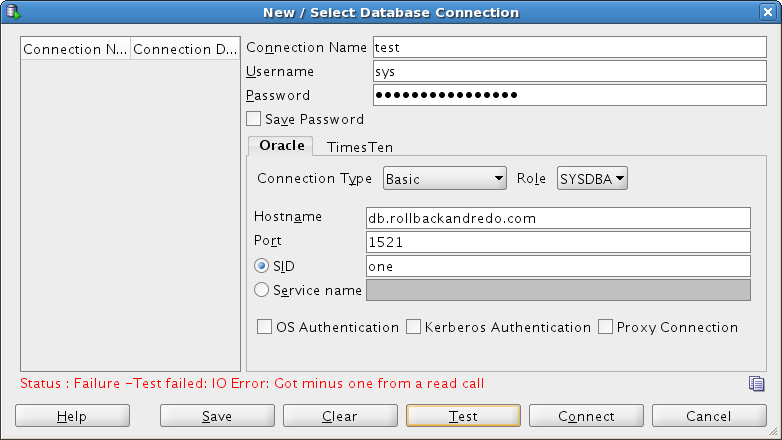
Quiet Friday’s are a nice treat but something too often squandered. This past Friday I found myself left to my own devices as the rest of the DBA team were working from another location. This left me free to get a few things about running our environment straight in my own mind with the most notable being was how to use CommVault for database backup and recovery beyond simply copying RMAN output to tape.

Continue reading “Playing with Oracle Enterprise Manager”

Oracle Data Guard and Database Incarnations

// Data Guard // Database Incarnations // Standby Logs applying in Alert Log but not in V$ARCHIVED_LOG

Over the past week I’ve been getting a great introduction to the practical workings of Data Guard. In the past I’ve worked a lot with Disaster Recovery systems built using Oracle standard edition and therefore not licensed to use Data Guard and in those circumstances a poor man’s version of the system was put in place by using RSYNC to synchronise archive logs between a production database and a DR database. With the logs in place, a script run on a schedule would recover the data from the logs. It turns out that the concept of Data Guard is pretty similar in that it’s basically about getting archive logs to the right place and setting the destination database into a mode where it can read those logs and be ready for when disaster strikes.

Continue reading “Oracle Data Guard and Database Incarnations”

5 Considerations for Brilliant Diary Management

My diary today is blank. Of course, the fact that I’ve nothing scheduled to do doesn’t mean that I’ve nothing to do.  In the life of a consultant an empty day in the diary can be a Godsend allowing for the all important admin to be done, leading to a day filled with expense claim submission, outstanding paperwork being filed, laptops getting some much needed systems administration attention, personal projects being followed up on (like the in-house test servers I manage), and clients who haven’t been in touch for a while getting a courtesy call to ensure that everything is OK with them. These days are much needed and welcome. But not too often.

businessman playingAn IT Consultant with “nothing in the diary for today”

It can be easy as a consultant, who lives and dies by the contents of the diary, to look at their full calendar for the next few weeks and despair at how busy they’re going to be, overwhelmed by the volume of work coming their way and longing for empty days like today. I like to take a different, more entrepreneurial view of the diary and try not to think of it as merely a calendar of upcoming activities but rather as my order book, as a promise of future work, and that puts the whole thing into a more favourable light.

Regardless of how you look at your busy schedule, the fact is that managing the diaries of multiple people can be a complex task and should be handled with some care as mismanaging it can lead to disaster. With this in mind, here are some of my considerations for managing the diaries and therefore the time of consultants. Continue reading “5 Considerations for Brilliant Diary Management”

Supernanny = Super Consultant

I was at the doctor’s office the other day as I’d fallen foul of the Man-Flu and needed serious help. While I was in the waiting room a mother came in with her two young children, a boy about 3 or 4 years old and a little girl of about 18 months. It was pretty obvious, even to the untrained eye, that there was a significant problem of sibling rivalry growing between the two kids, with the boy especially in need of that careful balance of attention and discipline. He was climbing over furniture, pulling things from his mothers bag, and picking up his sister in unsafe ways, all in all being the kind of child you don’t want sitting behind you on a long flight!

I mentioned what I’d saw when I got home as I wasn’t impressed with the mother’s lacklustre attempts to deal with her son and I was surprised at the response I received: “Supernanny has ruined a lot of parents out there”

Supernanny, with her naughty spots and rules about never raising a hand to child, has made a lot of parents believe they’re child psychologists, so they go around trying to reason with three year olds in the same way that they’d try to talk to a thirty year old and then simply give up in frustration when they inevitably get nowhere. In reality, I don’t think Supernanny herself is actually to blame for this as I think what has happened is that parents have misinterpreted the message the TV show was trying to convey.

Supernanny Jo Frost… looking for her paycheque

Continue reading “Supernanny = Super Consultant”

Overcoming Initial Resistance: A Guide for the Gun-Shy

A video on the Lifehacker website caught my interest recently, so much so that I found myself repeating some of the content to a friend who was going for a job interview. In the video, author Ramit Sethi outlines what he calls the Briefcase Technique for use during negotiations for things like increases in salary or contract rates and so on. The technique is brilliantly simple, though perhaps more than a little gimmicky. The basic gist is you go into such negotiations totally prepared, so much so that you would be in a position to produce a document that outlines the benefits you could bring to a potential employer or client having developed an understanding of the issues facing the business and genuinely preparing a plan for how you would personally deal with those issues. The real heart of the Briefcase Technique is that you’re supposed to pull out this document (from your briefcase, hence the name) just when you get to the money negotiation section of the interview.

The Other Briefcase Technique

While the video is entertaining in an infomercial sort of way, I’m not sure how well the technique would work outside of the U.S., or outside any situation where money isn’t explicitly discussed (especially as many employers tend to make salary offers when later offering the job and don’t negotiate it during the interview – if you’re contracting that can be slightly different). However, in the video Sethi does make an interesting point about the difficulties around starting something, particularly a document that requires any form of serious creative thought. Continue reading “Overcoming Initial Resistance: A Guide for the Gun-Shy”

Leadership in IT Projects

I’m a big fan of Starship Troopers. Before you run away screaming please note that I mean I’m a big fan of the 1959 book by Robert A. Heinlein and only a regular level fan of the 1997 Paul Verhoeven movie. Heinlein wrote science fiction about the nature of government and the role of the people in society. In a later novel he stipulated the things that a human should be able to do and one part of the quote always interested me, to paraphrase Heinlein: a person should be able to “…take orders, give orders, cooperate, and act alone” when necessary. Sound advice, especially the giving and taking orders part, and doubly so when it comes to project management.

Leadership, Starship Troopers style! Would you like to know more?

Continue reading “Leadership in IT Projects”