Project Management, on the scale that business managers are really considering when they talk about it, is radically different from IT Support as the nature of the projects under consideration moves to a different level.
Ask a senior manager in an Irish SME about project management as it relates to IT and they are unlikely to think about server upgrades or even moving from one version of an email system to another. What this term is more likely to conjure up is images of a suit-wearing professional organising large-scale projects; for the SME this would mean projects like Finance, ERP, and CRM system implementations.
Project Manager: A suit-wearing professional who organises large projects, drinks coffee, updates Facebook
Have you ever read your horoscope? Horoscopes are bunkum, a bit of fun that’s included in the newspaper to fill up white space and maybe make a few quid from the associated phone lines that you can ring for a more up to date version. The way horoscopes work is by laying down a very general little story for you to read and associate with by virtue of your date of birth. Horoscopes are so general that they have to resonate with someone somewhere. I think that whoever wrote the original templates for the daily horoscopes were also the people responsible for the majority of job specifications that you regularly see advertised.
The Zodiac – from the same people who brought you the award winning “Spec for an ERP Project Manager”
Excluding technical skills, like a certain operating system or other piece of software, the characteristics that get listed on job specs are normally very generic. Everyone is looking for people who are efficient, work well in teams, have a “can-do” attitude, and have good communication skills. Being a good problem solver is a trait that always comes in handy, as does being methodical and having a good eye for detail, and when was the last time you read a job specification for a role where being punctual and honest were frowned upon? Continue reading “The Nature of Technical Support”
In Ireland, as in most countries, there are more small and medium-sized businesses then there are large enterprises. These smaller firms are competing at home and abroad in a wide variety of industries spanning traditional manufacturing, sales & distribution, and a host of diverse services, but they all tend to follow a similar development path particularly when it comes to Information Technology. Companies with less than 250 employees tend to have smaller IT departments (if they have any permanent IT staff at all that is) excluding of course those that are directly engaged in the IT industry, or those that have a strong knowledge worker focus. Even some larger businesses often have fewer IT resources if they just don’t think they need them (on two different occasions in the past I’ve been employed as the sole permanent IT resource in businesses that each had over 500 employees, both engaged in high-volume manufacturing).
It has been said that one man’s meat is another man’s poison and this is most evident in the way people order steak. Some like it well done, others like it medium, I like it rare, while some don’t like steak at all. This is all a matter of taste. Some people like one thing while others like something different. These differences make life interesting.
Even in The Matrix, Cypher knew the importance of a good steak
In the world of work people like different things too. Some like accounts, others engineering. Some people love to sell, others prefer to paint houses; the choices and options are infinite. Even within a specific profession, like Information Technology, there must be millions of career options available in millions of combinations. When faced with such a wide variety of choice we must remember that we are not all suited to all the options available to us, that’s how we narrow down our choices to what’s best for each of us, no matter what profession or trade we pursue.
I’ve recently had the good fortune to be in the position of interviewing people for a job. I consider myself to be extremely lucky in these dark economic times to be able to be offering work and I’m doubly fortunate to actually enjoy the process of recruitment as I find it to be deeply interesting, as is any area of life that exclusively deals with people and the infinite differences that we all manifest. Writing a job spec, contacting appropriate recruiters, and reading the CV’s that come in though is only the warm-up act for the main event: the interviews!
Setting out to discover what it is to be, and in the process how to become, a hacker is one of those situations where the first step is the hardest. This is not due to the technical difficulty of the process but is more to do with trying to determine where to start with such a large and varied field.
Maybe a history lesson would be appropriate? But at which point in the long history of hacking should the lesson begin? Do we go back to the 1960’s when the leaders of the open source software movement began their tinkering? Or to the origins of the Internet perhaps? Then again, can any history of hacking really commence without a discussion of the word itself? Is this hacking in the media sense of the word, bringing to mind the idea of a solitary computer expert sitting alone in a darkened room illegally accessing a government or corporate computer network, or should this be a history of the pure meaning of Hacking and therefore should we look at ancient Egypt and their technological endevours?
Figuring out where to start gets hard and can in no way please everyone, so in the best traditions of the Bond movie, lets begin with a song!
Back in 1999 there was, for a brief moment, a popular song that caught the zeitgeist of the eve of the Mellenium just right – the Sunscreen Song. The song was actually a speech published in the Chicago Tibune, written by one of their journalists a couple of years previously, which was then put to music. As with most popular things, someone on the Internet made a parody. Here’s the video for the original and the lyrics to the Sys Admin version. Below that is a look at the different terms used in the parody version.
Sysadmins of the class of ’99:
Wear a Leatherman.
If I could offer you only one tip for the future, having a Leatherman would be it. The long-term benefits of a Leatherman have been proved by BOFHs, whereas the rest of my advice has no basis more reliable than my own meandering experience. I will dispense this advice now.
Enjoy the power and beauty of root. Oh, never mind. You will not understand the power and beauty of your root access until it’s taken away. But trust me, when you need to kill a runaway process, you’ll think back to the scripts you had and recall in a way you can’t grasp now how much possibility lay before you and how much you could do. You are not as powerless as you imagine.
Don’t worry about the Y2K bug. Or worry, but know that worrying is as effective as trying to mount an old chain of Exabyte tape drives by chewing bubble gum. The real troubles on your network are apt to be things that never crossed your worried mind, the kind that get you called in at 4 a.m. on some weekend when you were supposed to be recovering.
Do one thing every day that scares the lusers.
LART.
Don’t be reckless with other people’s files (if it can be traced back to you). Come down like a ton of bricks on people who are reckless with yours.
Nerf.
Don’t waste your time on lusers’ backups. Sometimes you’re ahead on patches, sometimes you’re behind. The race to maintain an up-to-date system is long and, in the end, it’s only with yourself.
Remember compliments you receive. Log the insults in a database, cross-referenced on date, time, reason and luser. If you succeed in doing this, tell me how (and ftp me the binary).
Archive your lusers’ old web caches. Throw away your logs.
Drink Jolt.
Don’t feel guilty if you don’t know what you want to do with your old glibc libraries. The most interesting sysadmins I know didn’t know at 22 what they wanted to do with their systems. Some of the most interesting 40-year-old BOFHs I know still don’t.
Get plenty of UPSes. Be kind to your power supplies. You’ll miss them when they’re gone.
Maybe you’ll recover, maybe you won’t. Maybe you’ll have lusers, maybe you won’t. Maybe you’ll become a PHB at 40, maybe you’ll dance on the head of your boss on your last day before you wipe the servers. Whatever you do, don’t congratulate yourself too much, or berate yourself either. Your choices are half chance. So are everybody else’s. But at least you can read their email.
Enjoy your network. Use it every way you can. Don’t be afraid of it or of what other people think of it. It’s the greatest instrument you’ll ever own. No matter what the PHBs think.
Compile, even if you have nowhere to do it but on your laptop.
RTFM, even if you still use ‘tar -xvf’ rather than ‘tar xvf’.
Do not read NT magazines. They will only make you feel ill.
Get to know your hardware suppliers. You never know when they’ll go out of business. Be nice to your PFY. They’re your best link to your past and the people most likely to play along when you kill the electrician with a power spike.
Understand that lusers come and go, but with a precious few you should wring their necks as soon as possible. Work hard to bridge the gaps in their knowledge and Clue, because the older you get, the more you need the people who knew you when you were nasty, and had a real mean temper when roused.
Live in your office once, but leave before it makes you arrive too early for work. Live in the machine room once, but leave before you start to whistle at 28.8. Travel without moving with a line into the CCTV system.
Accept certain inalienable truths: hardware prices will rise. Lusers won’t learn.You, too, will get old. And when you do, you’ll fantasize that when you were young, prices were reasonable, lusers were just as bad but sometimes they respected their sysadmin.
Only respect your ass.
Don’t expect anyone else to support you when you purchase a Starfire. Maybe you have photos of the Boss with a secretary. Maybe you’ll have a wealthy company with more money than sense. But you never know when either one might run out, or they’ll find out about the camera in the boardroom.
Don’t mess too much with your chair or by lunchtime you won’t be able to sleep in it.
Be careful whose software you buy, don’t be patient with those who supply it. Software is a form of nostalgia. Dispensing it is a way of fishing the minds of bad programmers for the ‘really neat’ ideas, wiping them off, painting over the ugly parts and selling it for more than it’s worth.
But trust me on the Leatherman.
Ben (the original author)
Why on Earth start with a song like this, you may ask. Well, the role of Systems Administrator really lends itself to the computer hacker personality and many hackers find themselves in such a day job. A job like this allows you to tinker with all sorts of technology and deal with a variety of problems that help teach more and more about computing, networking, security, and so on. Many fine books have been written on the subject, but none capture the playful hacker spirit as well as the above parody of the Sunscreen Song. And so, the definitions, which I hope will either refresh your geek vocabulary or add to it:
Sys Admin: aka Systems Administrator, the main man (or woman) responsible for a given computer system, usually a network in an organisation like a business. The job of choice for loads of hacker types, that often leads to a higher paid specialisation.
Leatherman: A multi-purpose tool, like a non-lethal version of the Swiss Army knife
BOFH: Bastard Operator From Hell, an internet based series of funny stories about a Systems Operator (the old name for a Systems Administrator that was primarily associated with Unix systems) who is, as the name suggests, quite the bastard. In the stories he passes the time by pricking about with the various systems under his control in order to mess with the heads of the users and his boss. The idea was picked up by The Register website who still publish BOFH stories based on the originals.
ROOT: The superuser account on Unix based systems, including Linux, the equivilent of Administrator on a Windows system. This user account has the power to do everything on the system unlike standard user accounts that are limited in their powers.
Runaway Process: A process is an instance (that is “an occurrance”) of a program that is being run. Therefore, a runaway process is a running program that won’t stop. This can be caused by a variety of things but usually boils down to bad programming or bad luck.
Y2K Bug: Either the greatest man-made disaster ever avoided or the best money-making scheme ever devised, no-one can be sure which.
Mount: Primarily a function of Unix type operating systems but features in Windows too, to mount a drive means to attach a filesystem source (something like a pohysical drive) to a directory so that the contents of the drive can be accessed. This function is one of many unfortunately named computer commands and items that mean something totally different in the real world – Root, I’m looking at you!
exabyte tape drives: A tape drive is, as the name suggests, a computer drive that uses magnetic tapes. These tapes are used for backing up the contents of a computer or group of computers depending on the storage capacity of the tapes in question.An exabyte is a massive amout of data equal to one million terabytes, so in this case the reference to Exabyte actually refers to an old company that used to make tape drives.
Network: Specifically, a computer network, is a collection of computers (and computer-like devices) that are connected to each other. When you connect to the Internet you are connecting your device to an INTERconnected NETwork (hence, Internet). Most companies who have two or more computers connect them into small networks so as to be able to share resources like files or printers. Networks, and the care thereof, are the whole point of having Sys Admins in the first place.
Recovering: Not entirely sure what was meant in this context, but I’m going to run with the notion that the auther meant recovery in the sense of time off for the administrator, a.k.a. the weekend, as opposed to the use of the word to describe the process of restoring data from a backup medium like a tape or disc (see Backups below).
Lusers: A derogative term for the users of a computer system
LART: Luser Attitude Readjustment Tool, aka Clue By Four, a device used to knock sense into a User
Nerf: A brand of toy gun that shoots foam darts. Fun to have in the office and unlikely to cause serious property damage or harm to co-workers (unless you insert pins or paperclips into the tips of the darts)
Backups: Copies of data used in the event of damage (in whatever form) occurring to the original. Backups are a real pain in the arse for many admins and warrent their own song which I’ll publish when I find it again. A good backup can save your arse in the event of something going wrong or can hang you if you’ve done something you shouldn’t have – too many admins have left incriminating evidence on backup tapes.
Patches: Patches are fixes to programmes. In the Windows world they are more commonly known as Hotfixes. Patching a system is an important responsibility as many patches relate to system security. Patch information is also a great learning tool for the hacker due to the many security related patches.
Database: A piece of software used to collect data in an organised and structured manner. This is a really basic definition, so for more click here
ftp: File Transfer Protocol
binary: In this instance, binary refers to a type of file that can be run on a computer – in Windows terms this would be referred to as an executable (.exe file).
archive: A store of old data
web cache: A web cache is a store of web pages that are held in order to make browsing faster. Holding onto a users web cache means that you could know what sites they were visiting and can therefore use this knowledge against them (not that you would of course as that would be naughty!)
logs: In computing, as in every other walk of life, except the lumber and swerage industries, a log is a record of things that happened. Computers tend to write them automatically, ships captains have to write them up manually, starship captains get to dictate them to the ships computer.
Jolt: A type of high-caffine content cola that’s popular among those wishing to stay awake for long periods (hackers, college students, lorry drivers). More potent than standard issue coffee and has the added benefits of being served cold in a can or bottle and is therefore quicker and easier to prepare. Has been usurped (in Ireland anyway) by Red Bull.
glibc libraries: These are the parts needed to develop programs using the C language on computers usually running linux though they are platform independant. They are part of the GNU project, hence the “g” part of the name.
UPS: Uninterruptable Power Supply
PHB: Pointy Haired Boss
Server: Usually a computer (or other device) with a specific task or tasks that “serves” the requests from clients on a network.
read their email: Oh baby! This is one of the serious perks of the job when you’re a systems admin, the ability to read others e-mail. This can be a massive invasion of privacy and borderline illegal depending on where you are in the world, however, not only can it be enourmously fun it can provide you with an insight into what’s really happening in your organisation. Reading mail in this fashion will quickly prove the old adage about how information is power!
compile: The process of turning computer code written in a language that humans can understand (like C) and converting it into a language that the computer can understand (machine code)
RTFM: Read The Fucking Manual
tar -xvf tar xvf: tar is a piece of software for collecting files into a package file of sorts.
NT: Shorthand term for Windows NT, the version of Windows before 2000, which was before XP, which was before Vista, which was before Windows 7. The NT stood for New Technology as it was quite a departure from the old DOS based Windows systems that preceeded it. NT was the first serious attempt by Microsoft to compete with the big iron Unix systems.
PFY: Pimply Faced Youth
kill the electrician with a power spike: The accidental death of utility workers being caused by IT people is far more common than is ever reported. Luckily most sys admins during the course of their careers will not actually kill someone but are more likely to give themselves low level electric shocks as they attempt to repair equipment in a hurry and thus ignore the safety guidelines. It’s about this time that most sys admins learn how electrical fuses work.
Clue: As in sense, something that really isn’t all that common and is practically non-existent when most people get in front of a computer, as can be evidenced by the low number of people who read error messages before clicking the button to get rid of them and then wonder why the computer won’t work.
Machine Room: Aka the server room or comms room, the place where all the main computers and their associated gear live. Famous in civilain circles for the low temperatures maintained to enable all the fancy gadgets to work at their best.
28.8: 28.8kbps or 28,000 bps was a common speed for modems. Since modems MODulated and DEModulated digital signals into signals that the phone system could transmit there was sound involved in the range of human speech, hence the idea that it was possible to whistle at 28.8. Whistling at certain frequencies was an important part of the hacker culture, especially the part dealing with phone systems. Read this to find out more about just how important it was.
CCTV: Closed Circuit Television. Big Brother is watching you, which can be unnerving until you become Big Brother, in which case it’s excellent.
Hardware: Physical things, in this case, computers, printers, network gear (switches, routers, etc).
Starfire: Starfire was the codename for a big-assed server from Sun Microsystems.
Your Chair: The device between your arse and the floor. One of the more important factors in a sys admins life as a good portion of a day is usually spent sitting on one, unless you’re one of those admins who are always chasing around the place at the beck and call of every users little whim. If that is the case, you might want to consider another line of work or, at the very least, grow a pair. Your Chair is not to be confused with a users chair which, along with the users computer, provides the bookends between which many problems reside, hence the term PEBKAC – Problem Exists Between Keyboard And Chair. I’ve honestly seen admins nearly come to blows over chairs, they’re that important!
Humour plays a big role in the world of the Hacker; the whole point of undertaking any hacker type activity is all about having fun.While it’s easy to get caught up in the technology or darker aspects of the culture it’s important to stop every now and then and have a laugh, or at least crack a smile while no-one’s looking if you’re one of those super-serious sorts.
Last week I found myself getting defensive with a colleague of mine in a conversation about the value of system prototyping. My colleague suggested that there’s a difference between IT people and everyone else and that it’s that two IT guys can look at a diagram and see how a system will work while everyone else needs to see the system in action. There is perhaps an element of truth to this but like most things in life I think it depends on the people involved (which is why I leapt to the defence of IT people everywhere as I don’t like generalisations being made that somehow mark us out as different). Sometimes I can look at a diagram and make the imaginative leap to how a system might work. There are other times when I like to play with a piece of software or whatever to get to know it, and at the end of the day there’s nothing like using a thing to understand how it operates.
Also last week I was discussing Oracle Warehouse Builder with someone. OWB (as it’s known) is one of those systems that I’ve experienced but would like to get more experience of and it offers some functionality that might solve a nasty little problem many businesses suffer from which has bothered me for a while.
The I.T. industry is made up of lots of companies who declare themselves to be solution providers of varying sorts but I wonder how many times a prospective customer really goes to one of these firms and says “I have a problem” and how many times the provider actually has to go off and come up with a solution.
Paracetamol is a wonder drug. Whenever I get the man flu (which can kill!) I have found that plain old paracetamol works far better than the various cold and flu remedies offered at outrageous prices at the local pharmacy. The way that particular medicine can deal with a man flu and the crippling symptoms that come with it is truly amazing. While many think that the age of wonder gave way to the age of reason a long time ago, I still find wonder in how things work, be that painkillers or computer networking systems. Continue reading “Dynamic DNS or “New Adventures in Old Routers””
When I was in college our Programming lecturer cautioned against a career in I.T. due to the need to keep up with the constantly changing technologies such a career entails. Personally, I thought that sounds brilliant, always something new to learn and play with, bring it on, I said. Later on in my education I encountered other lecturers who said that yes, keeping up can be difficult as well as fun but there are some fundamental skills you can learn that transcend specific technologies (which is why good developers are able to learn several languages as long as they have a good grasp of the principles of programming).
I.T. is constantly changing and with that pace of change some technologies come into and slip out of fashion quite quickly. As technologies like smartphones and other internet devices become accepted by wider audiences than traditional I.T. people, fashion plays an increasingly important role. For example, the iPhone. Continue reading “Hotmail & the iPhone”
I’ve always had an interest in knowledge management and how tacit knowledge in particular can be captured within an organisation. I once read about a management consultancy that use a specially constructed database to store information about the different industries and past projects the consultants have worked so that less experienced consultants can access the knowledge of the senior staff when dealing with situations unfamiliar to them. The value in a management consultancy is in the experience (and therefore knowledge) of its consultants so the database they use is an incredibly valuable resource that forms an integral part of the offering to clients. It occurred to me that a database like this is pretty valuable to any type of knowledge worker, in my case I.T., so recently I set about implementing a personal level version of the management consultancy knowledge database.
An Inconvenient Mess: Al Gore’s office space and his unique system of knowledge management
A pdf version of this posting can be downloaded here.
Introduction:
Websites, in all their different forms, are hosted on web servers and the Apache web server is one of the most popular currently available. It would be incredibly inefficient to only host one website per server, particularly in a commercial web hosting scenario, but for designers and developers at any level there is often a need to work on different sites, or different versions of the same site, in the same environment. In order to make the most of your resources the logical approach is to host multiple sites on one installation of Apache server.
On Apache each website is treated as a Virtual Host, with the concept of hosts relating to how DNS is configured in order to route traffic to a website. When a web browser requests a website via a URL the request is handled by DNS which knows that, for example, http://www.somesite.com relates to a specific IP address – the address of the server that’s hosting the site. DNS forwards the traffic to the server which in turn responds with the information requested. As far as DNS is concerned the URL of the website bound to a specific IP address is just another host in its database.
The latest addition to Oracle’s technology roster could open up some interesting options for DBA’s – like performing upgrades with zero downtime – but at what cost?Continue reading “Oracle GoldenGate”
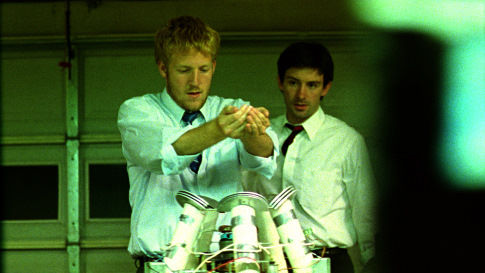
As the eleventh week of 2010 progressed I was reminded of the opening sequence of the film Primer, where the voiceover introduces the characters and, more importantly, their nature:
“Meticulous, yes. Methodical. Educated. They were these things. Nothing extreme. Like anyone, they varied. There were days of mistakes, and laziness, and infighting. And there were days, good days, when by anyone’s judgment… they would have to be considered clever. No one would say that what they were doing was complicated. It wouldn’t even be considered new. Except maybe in the geological sense. They took from their surroundings what was needed… and made of it something more.”
Some weeks are lazy, and some weeks are good, and this week was definitely one of the good ones!
A wide range of topics crossed my path this week, some technical, some less so. And we got to celebrate St. Patrick’s Day with the time honored tradition of spending the day drinking.
Technology:
Oracle: Early in the week I was reminded of a technique for recovering an Oracle database that has suffered the loss of a datafile by recreating the control files to exclude the reference to the missing file, thus allowing you to get in to make repairs. While this is nothing too exciting it made me think about how important it is to understand recovery strategies for all systems in use as this knowledge will remove any mystery about what to do in the event of something going wrong. When something breaks down, be it a computer system or your car, it’s the uncertainty around the failure and how to get back to normal operations (and how much that will cost) that brings high-stress levels. If, on the other hand, you’re familiar with the system and are not intimidated by the recovery process, then life is a little easier.
The conversation that reminded me about the control file thing also touched on the subject of Oracle GoldenGate, more importantly it’s footprint to cost ratio – a small install of GoldenGate may be less than 100MB in size but can still set you back in the region of thirty grand! The bloke I was talking to seemed to be of the opinion that he shouldn’t have to pay so much for such a “small” programme, so I hit him a slap and moved on (<- please not that this is a joke and not an admission of a crime – that comes later!).
WordPress: My tinkering with the WordPress content management system (it’s now far too well developed to still think of it as merely a blogging system) has continued in the test environment at home. This week my time was spent on customising the login screen via a neat little plug-in as well as uploading files to an embedded gallery. The gallery side of things impresses me greatly as it’s easy to upload large quantities of picture files, particularly as the system (NextGen gallery) creates thumbnails automatically and allows for picture sequences to be changed with ease. The custom login screen is also pretty decent, but some of the changes I’d like to implement will require some manipulation of the PHP code itself and will definitely need some testing to get right. In the meantime the login imagery has been altered and looks OK. I’m now kicking around the idea of a complete change to the login using the full screen as opposed to the default notion of a dialogue box.
I can foresee a time when I implement WordPress for any website I’m involved in, and it’ll hopefully be soon when The Hackers Coven (http://www.hackerscoven.net/) moves over.
Microsoft Security Essentials: I’ve been a disappointed with the performance of Avast AV at home as this week a nasty little file managed to sneak in and mail itself onto a mate of mine. This prompted an immediate shutdown of Outlook operations on the PC until the AV situation could be improved. I liked Avast up to this point as it allowed for multiple schedules to be setup and the voice alerts were fun, giving your computing a Star Trek type feel. However, like so many things in life, AV is only as good as it’s last screw up and Avast screwed up. MS Security Essentials has moved from Beta to V.1 and is getting decent reviews, coming second in a recent list of AV tools, the highest ranking free tool by far. It’s now installed and we’ll see how it gets on over the next while.
Apple iPad & the Safari Web Browser: My current employer has a retail operation adjacent to the offices and I was thinking about public-facing IT and how important it is, as even though the IT used isn’t created by my employer it reflects badly on the professionalism of the organisation if that IT performs poorly, or even just looks bad (as in old and busted). The iPad goes on general release early next month and it occurred to me that it may just be the ideal tool for use in our showroom as the guys there use Microsoft’s CRM retail portal as their primary application for processing sales and the iPad looks flash. I’ve begun testing the use of Safari with CRM Portal as, if the iPad is anything like the iPhone, Safari will be the only supported browser. Early tests with the Portal are positive, though only Internet Explorer works with CRM Back Office. The testing will continue but hopefully I’ll be getting my grubby mitts on an iPad soon enough!
MSXML 6: What a pain in the arse! My employer uses an application that has SQL Server express built in and one of the lads needed it installed onto his laptop. He’d tried and failed himself so I took a crack at it. Sure enough, the install routine conked out when it got to installing SQL Server. Turns out that there’s a problem where PCs have run an update on MSXML before installing SQL and the SQL install stops as it hits a newer version. Microsoft provide a neat little tool called the Windows Installer Clean Up that allows you to remove the reference to MSXML and therefore gets SQL Server installed – check out the link below for more details.
Towards the end of the week I came across an article about a CIO who was changing the way his department is perceived by basically assigning a business value to the work of IT and talking about IT in business terms. It’s an interesting idea and worthy of consideration but definitely requires not only the right vocabulary but also a real understanding of how other’s in the business think. What struck me though was how much of a revelation this seemed to be to everyone involved. I’ve always thought it a little strange when IT heads don’t think in business terms as their entire function is to support business operations. Still, the article was a good read, and I liked the bit about changing the words used to describe IT related things. (There’s a link to the article at the bottom of this page).
Entertainment: Week 11’s primary entertainment was found in the pub on Wednesday as we got together to celebrate all things Irish for St. Patrick’s Day. Tradition dictates that we hole up in a small place about seven miles down the road from home (safer to be away from home on 17th March) where we hit the sauce the moment the Angelus bell stops ringing and stay there until we can take no more. This tradition was followed to the letter and a most entertaining day was had, however the volume of booze consumed did lead to one small problem:
Caprica: The latest episode of the prequel to Battlestar Gallactica was viewed while I was extremely under the influence, so my recollection of what happened is hazy at best, but I do remember that the show ended well with Daniel figuring out an important deatil about his shiny new Cylon. Caprica is shaping up nicely, it’s nothing like Battlestar so I’d imagine some fans are a little disappointed, but I like it, though the Greystone’s are the main focus and should get more screentime as the Adama storyline is bogging down a bit too much in Touron culture.
Hustle: I’m still working through older episodes of Hustle and I think I’m somewhere in series four at the moment. This episode featured Patrick Bergin as a diamond fanatic who’d had a necklace stolen for his collection that was subsequently lost by the thief (a friend of Micky and Albert’s) who he had beaten up. Micky steps into the mix to help his friend and get one back at Paddy Bergin.
I’d been looking for an excuse to try this out for a while, but as with such things, a reason presented itself that REQUIRED me to try Kon-Boot in order to get onto a Windows machine that I didn’t have a password for.
The situation is this – a typical problem that presents itself to administrators is new starts with no notice, that is, a new person is coming into the company on Monday and I was told about it today. Today is Friday. The person is only going to be here for a short while but they still need a PC and access to the company network, so I had to rustle something up for them. There’s been a spare PC on my desk for a while now and this seems the perfect opportunity to get rid of it for a while, however when I powered it up I realised why it was there in the first place. It works, but no-one can log on as no one has a clue what the local password is and it won’t connect to the company domain so those user accounts are no good either.
I’d seen Kon-Boot on an episode of Hak5 and had sworn that I’d get round to trying it our for real. Not too long ago a friend of mine contacted me asking for advice on how to deal with the problem I’ve just been presented with and I suggested that he try this naughty little piece of software that’s designed to get you through the pesky security on a windows computer. I’m not sure if he ever tried it but I vowed that I would.
So, this very afternoon I was finally given the excuse I needed to do this (legitimately) at work. I searched for the website (see links below) and downloaded the iso image for the Windows version. This I burned onto a disc which I used to boot the PC in question. Upon boot, you are presented with an old school boot screen that presents the credits for the developers of the software. This reminded me of the credits that used to go at the beginning of old Amiga games that had been craked and were a favorite of the kids at the school I attended back in the day – if you take a look at the Kon-Boot website you may notice some other references to the old Amiga systems.
Once you get beyond this screen another, similar screen lets you know the system is loading. From this point you are in familiar terrirtory as the XP loading screen is presented and the computer gets to the CTRL ALT DELETE prompt as normal. All is far from normal however, as once you press those three keys you can put in any old muck and the system will log you on.
That’s it. You’re in at that point and free to do whatever you please.
For large technology businesses acquisitions are a way of life. In the book Necessary But Not Sufficient by Eli Goldratt, the fictitious ERP company at the centre of the novel, BGSoft, has found itself making acquisitions in order to meet shareholder targets for sales and revenue – the only way high targets could ever be achieved was to buy another company and add their sales to BGSoft’s actual sales in order to reach the yearly goals. The company was not in a position to continue this strategy and in the story senior management try to develop new offerings in order to move into different markets instead.
Despite the book being pretty lame all round, I imagine that this situation is not far from the truth for large tech firms who have to operate “Acquisition for Growth” strategies, and it goes some way to explaining the unusual purchases some of these firms make. Microsoft has always been known for its aggressive acquisition strategy; Cisco were accused of buying research as opposed to doing any; HP picking up Compaq (technically a merger, but it felt like a buyout) was so wacky it contributed to Carly Fiorina losing her job; and over the years Oracle has made some odd decisions on how to spend its cash, not least of all the recent purchase of Sun, though upon closer inspection you can see where Larry was going with that one.
Mergers & Acquisitions = Murders & Executions (at least in “American Psycho”)
The motivations behind acquisitions aren’t often clear, but every now and then a company buys another and it makes total sense, like when Oracle picked up the little known software firm GoldenGate and thus its data integration product of the same name.
Oracle sent out a rather low-key email alert to herald the addition of GoldenGate to their product portfolio so I was surprised to discover upon further investigation what this new product really is. Oracle GoldenGate (as it’s now known) is software that allows users to synchronise data between databases, in any direction, regardless of the database software or platform its running on, in real-time, without touching the data in the database. So, with GoldenGate it is possible to synchronise data between, for example, an Oracle database running on AIX and a SQL Server database on Windows Server 2003. Not only can data be replicated from a source database to a target, but any changes that occur on the source can be applied, in real-time, to the target. Using GoldenGate, it’s possible to keep two databases in sync even if they run on totally different platforms.
From a technical standpoint, what makes GoldenGate special is how the designers leveraged the architecture of the database systems their software works with. Enterprise scale RDBMS don’t write data directly to database files but instead utilise intermediary log files to allow for concurrency and resilience. GoldenGate reads the log files not the database itself to determine what data goes where. It extracts the data into “Trail Files” that it transports over standard network infrastructure to the target system where it is loaded, performing operations on the data along the way if so desired. The reading of the source databases transaction log files to extract data and changes means that data stored within the database is untouched and therefore the overall performance of the system is unaffected.
Golden Gate – an image normally associated with a different technology firm…
At first, the ability to perform these types of actions seemed obvious, but when I thought about how to achieve real-time data synchronisation with the existing Oracle offerings I realised just how powerful this software is – it’s a far cry from database links and materialised views, and when you consider that the database doesn’t have to be Oracle at all you begin to imagine all types of areas where this can be of real use, which is why Oracle’s promotional literature offers a series of scenarios where they envision GoldenGate to be a critical component. The key areas Oracle focuses on are:
Data Synchronisation
Zero Downtime Upgrades & Migrations
Disaster Recovery & Data Protection
Operational Reporting
Operational Real-Time Business Intelligence
Support for Event Driven Architectures and Service Orientated Architectures (EDA/SOA)
Oracle’s purchase of GoldenGate is going to have major repercussions if they are able to fully integrate the technology as they plan to. Oracle Streams is soon to be extinct as a result, and DataGuard had better watch its back too. GoldenGate really feels like one of those game changing technologies that only come along every now and then.
What Oracle has really done with their acquisition of GoldenGate is bring the software into the mainstream. As a standalone offering it was interesting, but now with the might of Oracle behind it GoldenGate is a must-have for the large enterprise with serious data integration concerns, despite the high price tag Oracle have put on the software.
Oracle adapting this technology, either by development or in this case purchasing it, not only makes sense, it actually makes you wonder what took them so long?
As a serious fan of movies I love it when I watch something very familiar and gleen something new from the viewing, like some obscure detail in a scene that adds a new dimension to the story. Recently I caught an airing of Robocop on the TV – which is a classic example of once again watching a film I have on DVD just because it’s that good.
…from the director of gems like “Showgirls” and “Hollow Man”
As I watched this classic piece of 80’s sci-fi my mind drifted to the different things that films can teach us. Some movies are pure entertainment, some tell a story that needs to be told and some, like horror films (I’m a huge fan of horror movies) are actually modern day morality plays designed to teach the audience serious lessons (teen slasher flicks usually preach about the dangers of drink, drugs, and promiscuity – check out Scream for an overview of this and Halloween to see it in action).
My current contract has come to an end and I am facing into a new role starting on Monday. So, my next assignment beckons but, as House of Pain famously asked, “How d’ya know where ya’re goin if ya don’t look back?” So, with the last contract just over, and in the best traditions of PRINCE 2, what were the lessons learned from the past seven months?
It’s been a strange post-birthday week or so not least of all because of the gift I received from the guys at the radio station Liffey Sound FM – a primetime slot for a rock show!
The 10:00pm to Midnight slot has come up due to the end of the current show The Glory Train, which always seemed to be an odd choice of programme for that time on a Friday as it’s all about religion. The notion of replacing a religious programme with a rock show is so wicked it’s hard not to laugh out loud at the very thought of it! The Murt & Niall Rock Show is about to move from the realms of pub-talk to a real live actual radio programme…
Now, a week after I was offered the slot and as we face into the last days before the show goes on air, I find myself looking at how best to make the show as good as it can be. Odd questions pop into my head that if I can answer them then we’ll have a cracking show. I guess the most important of these questions is: what kind of radio show would I tune into on a Friday night? This is a tough question as I really limit my radio time to when I’m in the car. So, if I were driving along one evening and an ad came on for a programme to be aired on a Friday night, what would it have to be about to make me listen?
There are four radio shows that I can think of that made me want to listen to them.
1. The Russell Brand Show – the now infamous programme that recently made the career of the self-confessed S&M Willy Wonka. I listened to the shows podcast, which condensed a two hour show into roughly 45 minutes as the music was cut out due to the restrictions on music in podcasts. The show was pure comedy driven by Brand with loads of help from his writing partner Matt Morgan. Regulars on the show included Noel Gallagher of Oasis and a resident poet who summed up the show at the end. The podcast featured celebrity interviews and these along with some smaller features that included mails and texts from listeners made up the bulk of the show. The comedy was driven by Brand discussing what he’d been up to that week.
Russell Brand – Rode Manuel’s granddaughter and got the boot (luckily not the clap!)
2. Superman – the BBC Radio 4 drama mini-series from about twenty years ago – brilliant from start to end!
3. The Hitchhikers Guide to the Galaxy – the BBC Radio 4 drama mini-series from donkeys years ago – brilliant from start to end!
4. The upcoming BBC Radio 5 show about “The Thick of It” featuring interviews with the cast and writers, but I’m only interested in hearing this show as I’m a fan of the TV series.
So, seeing as how this isn’t meant to be a radio drama, is funny the way to go, ala Brand? Loads of Irish radio shows feature humour but not one would make me go out of my way to listen in, and Russell Brand is a comedian, with the time and the talent to write comedy on a regular basis, as well as the experience of performing stand up for years. Maybe, eventually, a show could develop into something like that, but I’ve spent this week trying to find humour in news reports and coming up short, and the prospect of trying to wing it on the first outing isn’t worth contemplating.
There’s not likely to be any middle ground with the show, as one friend of mine put it, it’ll either be brilliant or shite! The absence of a happy medium here is the really scary part as now we have to work hard to ensure it’s not shite. Ironically, the best way to achieve this may be to limit the amount of on-air time we give ourselves at first and let the music just play.
One of the lads at the station offered this advice. Practice it twice and then forget about it; his reasoning for this being the idea that if somethings over-rehearsed then when something goes wrong (and it absolutely will) then there’s no wriggle room to get out of trouble, if you’ve practiced too much then one mistake ruins the whole thing, though at this point, practicing too much is the least of our worries.
Anyway, The Murt & Niall Rock Show commences tomorrow (Friday) night at 10:00pm till Midnight on Liffey Sound 96.4 FM and on line at live.liffeysoundfm.ie , so we’ll find out then how we get on.
It’s an incredibly weird feeling watching yourself on TV. It’s one thing to see yourself on the security camera feed in the off-license or even on a big plasma screen in the window of an electrical goods shop but it’s something very very different to sit down at home and see yourself on Network 2 of a Monday night.
Karl Spain Wants to Rock is a five-part documentary that follows comedian Karl Spain as he travels from Limerick to Dublin with a bunch of hard rockin’ tribute bands, stopping in various spots along the way to play gigs and vote off one band each time in the style of most reality TV programmes. One of the stops the gang made was in Tullamore, and this is where I came in.
I know a couple of lads in the radio business. To be fair, anyone who’s ever been to a pub in Tullamore knows someone who spins a few tunes for the local radio station, Midlands 103. One of those fine gents was approached by the production company, Bang Bang Teo, to be a panel member for the Tullamore round of “The Scrap Metal Tour”, but unfortunately he couldn’t participate, due in part to his lack of interest in rock music, but mostly to the fact that he had a regular paying gig as a DJ that was on at the same time. He sought me out, knowing that I love a bit of the ol’ rock music and am well able to talk shite when called upon.
Karl Spain – Rockin the mike!
After he’d passed my details along to the production company they got in touch and had me call down to the Bridge House one rainy Sunday evening. There I met the lads from the bands that were still in the competition at that point namely, Ireland Maiden (Iron Maiden), Metallitia (Metallica), The Rubber Plants (Led Zeppelin), and User Illusion (Guns n’ Roses). The AC/DC tribute, Thunderstruck, had struck out the night before in Limerick. I also met Karl, the production team, and the other two panel members – local warbler and choirmaster Brendan Keeley, and the legendary Brian Tatler from Diamond Head.
Brian Tatler – Riffmeister
I had a great old chat with Brian, and whilst busy trying not to sound too much the fanboy, I still managed to draw him out on subjects like his experiences meeting Metallica (which was an easy conversation to have as I had only watched “Some Kind of Monster” the night before). Brian Tatler is a gentleman, an elder statesman of rock, if you will and it was a pleasure to meet him and, I suppose, work with him. I say work, but all we did was sit at the back, listen to the bands, talk a little to the camera, and drink free booze. Karl was cool enough too, but he really was working and so he was ‘always on’ – making funny little comments at the drop of every hat – I would like to get chatting him in more relaxed times to get his perspective on being on the comedy circuit in Ireland.
The bands were great and while I’m not going to go into why we voted the way we did, I will say that it was a unanimous decision to send Ireland Maiden home and we voted in isolation, not knowing that they had come second last in the Limerick round the night before.
Tribute rockers Ireland Maiden
Watching the show on Monday night was odd. I had no idea about the task that the bands had been set to get punters into the gig, so that was fun, however any enjoyment I might have gotten from the programme was wiped out by my trepidation at seeing myself on the boob-tube. The best way to convey the feeling of watching yourself like this is to ask a question:
Have you ever listened to a recording of your own voice?
Most people have, and most people hate the way they sound. The first reaction to hearing yourself is “My God! Do I really sound that way to other people? Jesus Christ!” This is usually followed up with a short-lived vow of silence. Now, multiply that feeling by a million-billion times and you’re still not close to what it’s like seeing yourself on TV. After watching myself I not only swore a vow of silence but also promised to redouble my efforts on the invisibility potion I had been working on since I was a child. However, once you realise that you’re your own worst critic these notions quickly pass and you can get back to the idea of fame and fortune as a TV star (though probably not for RTE).
I will admit to one coping tactic I employed, though not deliberately, I watched a recording of the show on my own in the middle of the night, more than a little concerned about how it would turn out. This fear was baseless as it wasn’t me that looked so bad but Tullamore itself, which if Karl Spain Wants to Rock is anything to go by, is a practically deserted, dreary, grey, little place inhabited only by senior citizens, who all hate rock music and snubbed the show by not turning up for the gig.
Firstly, the town was quiet that Sunday, unusually so, due to the fact that local sporting hero Shane Lowry (all the way from Clara, just up the road from Tullamore) was that very afternoon busy winning the Irish Open Golf Championship. This would lead to a huge piss-up in Clara that night, which is where everyone was instead of in the Bridge House listening to the bands with us.
Shane Lowry – Local Hero
Secondly, and probably most importantly, no one knew it was on. There was no advertising in Tullamore that a gig like this was taking place, never mind that it was being filmed for a TV programme. This may have been down to the producers wanting the bands to do the task of drumming up business, but a few posters wouldn’t have gone a miss. A bit of radio advertising might have helped, but Midlands 103 probably serves the wrong demographic, which is almost certainly why the radio station that features in this weeks episode is not the local one at all, but i105-107 in Athlone – a town over twenty miles away from which few people would travel for a rock gig in Tullamore.
Tullamore is not blameless. The town has a very poor live music scene and there is no venue ideally suited for bands of any persuasion, especially rock. This means that there’s no real interest fostered in the town, so those who like live music are more likely to travel further afield to see bands. The really sad part of this can be summed up by the way Karl Spain bigged up the next episode of the show, when the bands travel to “the metal capital of the Midlands – Mullingar!” Sarcasm aside, there’s a grain of truth in that label and it’s a shame that the live bands who once graced the stage in #1 Church Street all those years ago haven’t been seen in town for such a long time.
I’m glad I got the chance to be a part of helping Karl Spain rock, if for no other reason then I got to down a few pints and listen to some great bands without having to put my hand into my pocket. I’m also glad that it made me take a second look at Tullamore and how it’s music and other cultural outlets need to be helped along, especially after three successful Fleadh Cheoil were held in the town. I’ll definitely be making more of an effort to annoy local landlords and promoters into putting on some decent music. I might also pester those lads on the radio too.
I won’t spill the beans as to who won the overall competition as there’s still three more episodes to go, so if you want to know you’ll have to watch, or ask me in three weeks time.
One final thought – the best part of being on TV is seeing your name in the end credits, I nearly knackerd the Sky+ box rewinding that part!
Martin Minnock – Metal Blogger (as they said in the show, though this new blog has yet to feature any music stuff – yet! (This will be resolved this week (promise (brackets!!!!!)))

 Project Manager: A suit-wearing professional who organises large projects, drinks coffee, updates Facebook















 Martin Minnock